
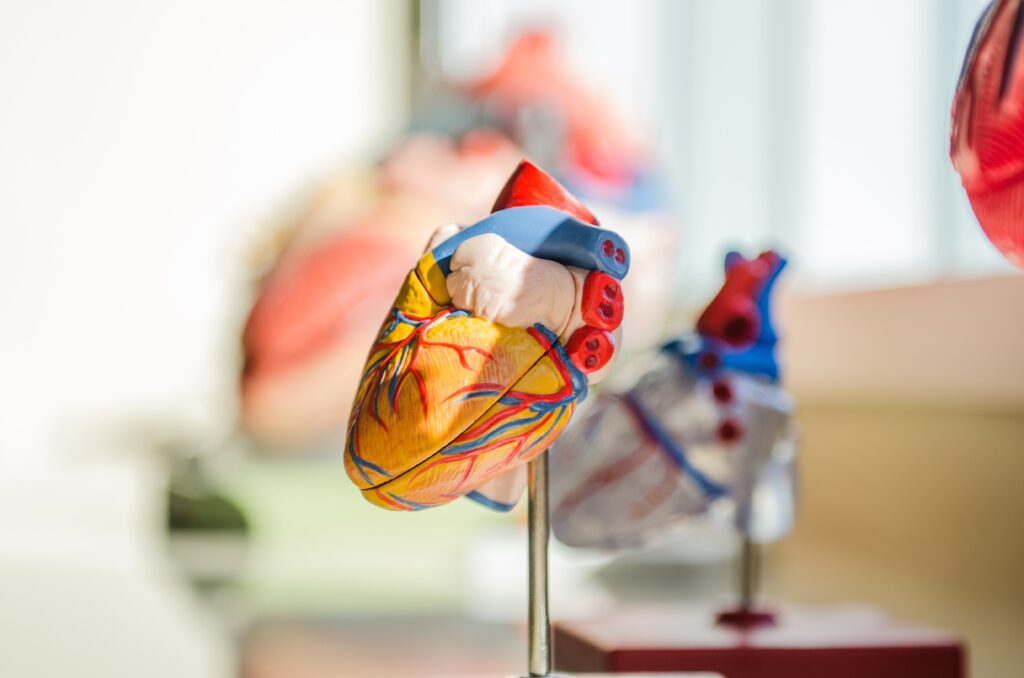
Cardiovascular disease includes conditions affecting the heart and blood vessels such as heart attacks, strokes and peripheral vascular disease…etc
The ABCDEFG mnemonic is a well-known aide memoire amongst medical students to remember the main risk factors of cardiovascular disease:
A – Age (increasing)
B – Blood Pressure (high)
C – Cholesterol (high)
D – Diet (unhealthy)
E – Exercise (minimal)
F – Fags (smoking)
G – Glucose (diabetes)
But it is missing a major female-specific risk-factor: THE MENOPAUSE!
- Oestrogen has a protective effect on the heart and blood vessels by helping to reduce the build-up of fatty deposits, reducing inflammation and relaxing the blood vessels to improve blood flow.
- When Oestrogen levels decline during the menopause, the protective effect (mentioned above) lessens which contributes to the development of the different types of cardiovascular disease.
- Women who have an earlier menopause (e.g. premature ovarian insufficiency), have an even higher risk of cardiovascular disease so it is recommended that they take HRT until at least the average age of menopause (51 years) to protect their cardiovascular system (as well as other benefits e.g. bone protection).
- Transdermal, body identical estradiol (patches, gels and spray) and natural progesterones (e.g. Utrogestan) can help to reduce cardiovascular risk by reducing inflammation within blood vessels, reducing blood pressure and improving cholesterol profile (lipid profile).
HRT is not suitable for everyone but as you can see from the ABCDEFG mnemonic (above), most of the risk factors of cardiovascular disease can be modified by lifestyle changes:
- STOP SMOKING.
- REDUCE ALCOHOL (MAX. 14 U/week).
- EAT NUTRITIOUS, BALANCED FOOD.
- ENGAGE IN REGULAR EXERCISE.
- TAKE TIME OUT TO SELF-CARE.