

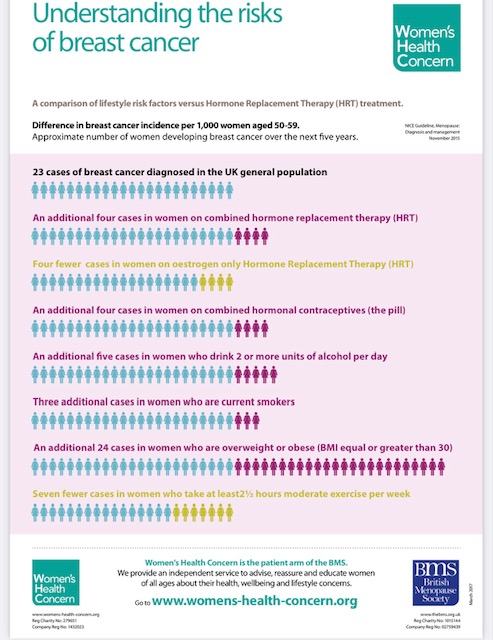
Breast cancer risk is an important concern many women have in relation to starting HRT and it is really important to put it into context. The British Menopause Society has created an excellent infographic to help to explain breast cancer risk to women by comparing it to other important risk factors (e.g. obesity, alcohol, smoking…etc) in order to contextualise the risk.
Please click on the link below and take your time to look through the infographic and then return to this page to consider the conclusions below.
So…What Are The Conclusions?
With reference to the “Understanding The Risks of Breast Cancer” infographic above:
Please compare the number of additional cases of breast cancer when using combined HRT (oestrogen + progesterone) (the 2nd line down) to when using Oestrogen only HRT (3rd line down):
– You can see that there is a slight reduction in breast cancer risk with this type of HRT so not all types of HRT carry the same risk.
Then please compare the number of additional cases of breast cancer using combined HRT to other important breast cancer risk factors (e.g. obesity, smoking and alcohol)
– You can see that there is a significantly higher risk of breast cancer with obesity and when drinking 2 units of alcohol or more per day compared to when using combined HRT.
– Women who engage in at least 2.5 hours of exercise per week (moderate exercise) also have a significantly lower risk of breast cancer.
It is therefore important not to be solely fixated on HRT when assessing an individuals’ overall breast cancer risk but to consider lifestyle factors too because some have a significantly greater impact on breast cancer risk than HRT.
Stopping smoking, reducing alcohol intake, maintaining a healthy weight and engaging in regular exercise can all significantly reduce the risk of breast cancer.
I Have A Family History of Breast Cancer – Do I Have A Higher Risk?
Women with a family history of breast cancer need to have their personalised risk of breast cancer carefully assessed and this can range from a low risk to a high risk.
After a preliminary assessment with their doctor, some women may require onwards referral for Genetics counselling for further confirmation.
How Do I Examine My Breasts?
Regular self-examination can be life-saving. Every womans’ breast feels slightly different so it is important to be familiar with what is normal for you so that you can notice any new changes and seek help as soon as possible.
Please let you doctor know as soon as possible if you notice any of the following changes:
- New lumps in the breasts, chest wall or armpits
- Skin changes (e.g. any rash, puckering, dimpling)
- Nipple inversion (if your nipples usually point outwards)
- Non-cyclical breast pain
- ANY CHANGE you are concerned about!
YouTube Video: How To Perform A Breast Self-Examination
When Will I Be Invited To The NHS Breast Screening Programme?
If you a registered with an NHS GP practice, you should receive an invitation shortly after your 50th birthday and then every 3 years until the age of 71 years.