

Urogenital atrophy (also known as genitourinary syndrome of the menopause and vulvovaginal atropy) is caused by a decline in oestrogen levels.
Vaginal dryness and painful sex are amongst many of the symptoms that can occur, and vaginal moisturisers and lubricants can be effective in milder cases when used alone or in combination with other treatments (e.g. vaginal/localised oestrogen).
However, it is important that you choose THE RIGHT PRODUCTS and that they are used in THE RIGHT WAY…
What Is The Difference Between A Vaginal Moisturiser And A Lubricant?
Vaginal lubricants reduce friction to make sexual encounters more comfortable and pleasurable. They are shorter-acting and can be used as and when required.
Vaginal moisturisers improve the moisture of the vagina to reduce discomfort. They are longer-acting and are usually used 2 – 3 times per week (depending on the product).
Why Does The pH Level Matter?
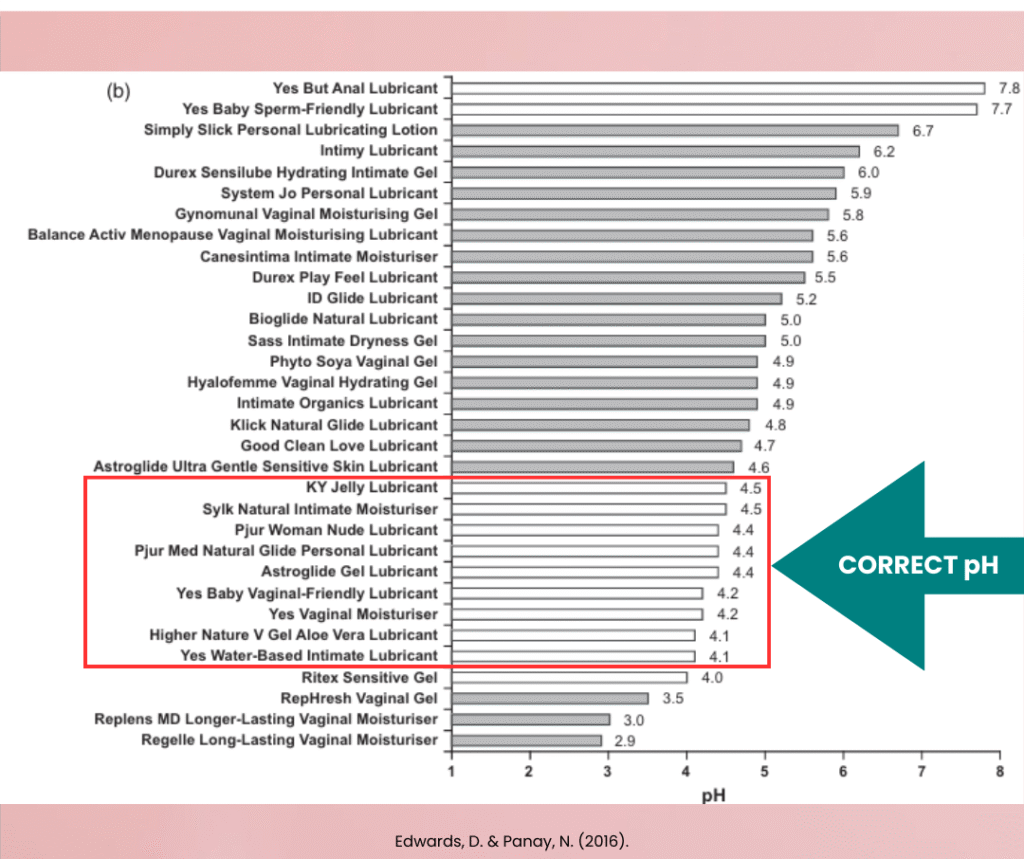
The pH level of physiological vaginal secretions is between 3.8 – 4.5, and it is important that this is maintained to support the normal vaginal microbiota (e.g. lactobacilli), which keeps the vagina healthy.
If the pH level of the vagina shifts outside of the normal range, this can lead to a decline in lactobacilli and an overgrowth of ‘bad’ bacteria (e.g. Gardnerella Vaginalis), which can lead to infections.
Why Does The Osmolality Matter?

Osmolality is a measure of the total number of solute particles dissolved in a kilogram of solvent (similar to the concentration of a product).
The osmolality of physiological vaginal secretions is usually less than 380 mOsm/Kg. If a vaginal lubricant/moisturiser has a higher osmolality, it is more likely to cause irritation to vaginal tissue.
It is therefore important that the pH and osmolality of vaginal moisturisers and lubricants are within the normal female physiological range.
Reference: Edwards, D. & Panay, N. (2016). Treating vulvovaginal atrophy/genitourinary syndrome of menopause: how important is vaginal lubricant and moisturizer composition? CLIMACTERIC, 2016 VOL. 19, NO. 2, 151–161